


In “Three Women,” 13's a Lucky Number
Updated: Apr 27


Ted Zurkowski -- educator, composer, guitarist, songwriter and actor -- steps bravely into a noteworthy new genre of country music operetta-- AKA the cowboy operetta. His “Three Women,” a new (although not a traditional) musical directed by Lynnea Benson, incorporates the construct of the country western ballad tradition to tell the story of Billy (Zurkowski), a middle-aged band-leader who is finding his way to the place he calls home, both literally and emotionally.
In thirteen scenes and thirteen songs, this production of the Frog Peach Theater Company at Theater for the New City exposes the joys and pains of a discordant life lived as a traveling guitarist. On stage, Zurkowski, in this show presented by Theater for the New City Executive Artistic Director Crystal Field, is backed by a live band, Denny McDermott (drums/percussion ) and Paul Page (bass guitar) both seasoned musicians at ease in the genre. The songs and story with strong direction and performances give us a cowboy operetta that both has beautiful notes and is simply noteworthy.
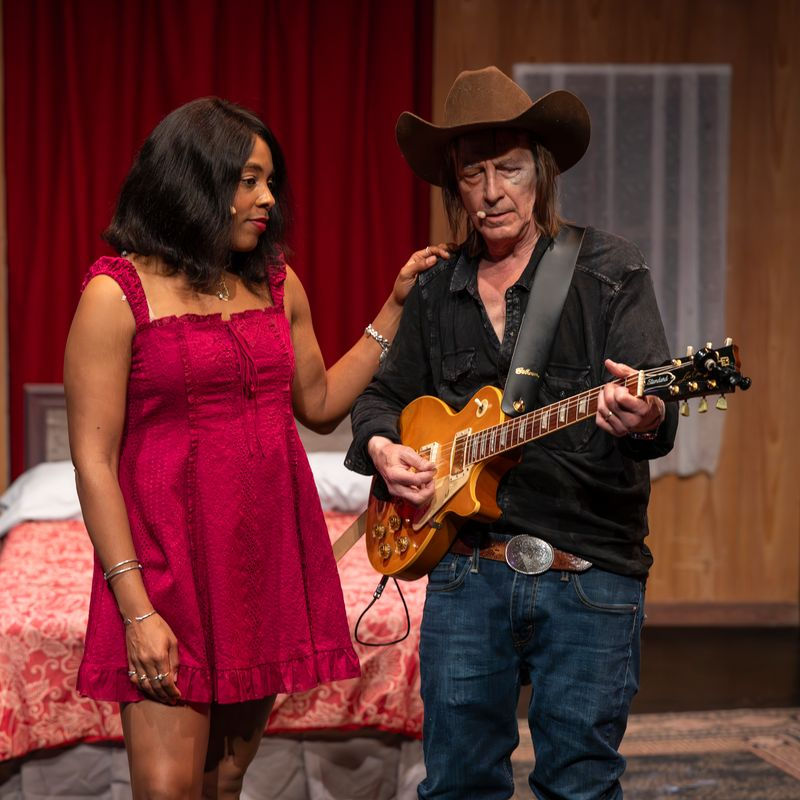
The stage is minimalist in concept: a bed and a small table with chairs let the audience focus on the songs and the actors who bring the ballads to life. This is not a musical in which spoken dialog is punctuated with songs. Rather, the music itself presents a seamless narrative. Like the stage setting, Victoria Brown’s costumes are simple and intentional. Director Lynnea Benson, whose primary focus has been on Shakespeare, creates a notably cohesive staging of “Three Women” exploring a very different expressive style.
“Forty-Five and lonely, Forty-Five alone. Seems I’m happy only when I’m on the road,” opens the drama. A romance with the road is doomed to be a lonely one. His wife Bonnie (Gina Simone Pemberton) offers a return to domestic bliss with a beautifully sung love song. But home is also his troubled brother Jake (DazMann Still). “His life is dark and dim,” we hear. “All his shades are down.”
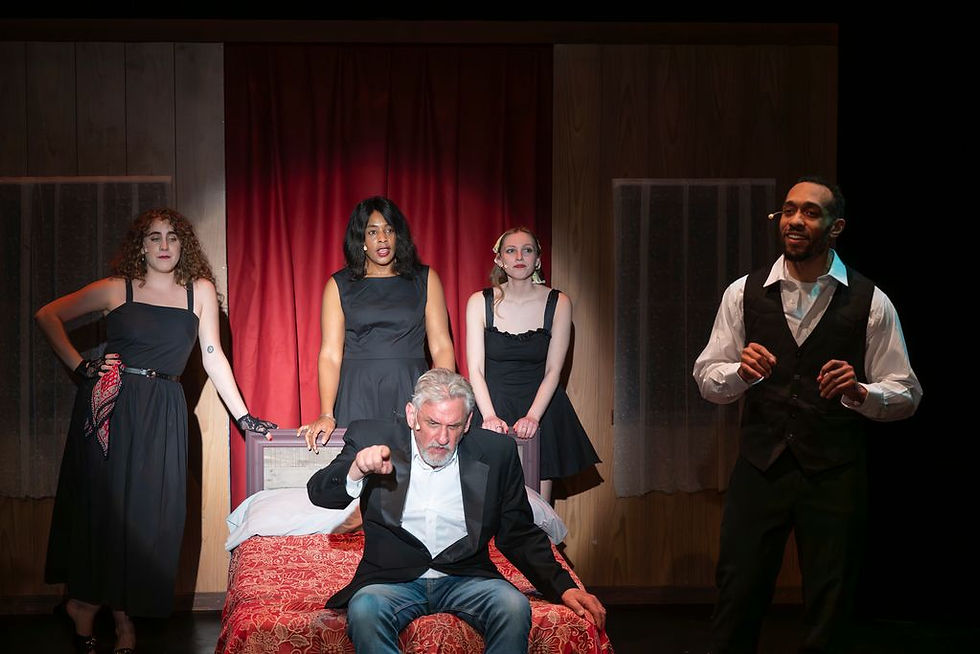
But Billy also has a wealthy girlfriend, Lady (Kaylyn Buehler) who presents a tempting and graceful prospect, a lonely lady despite her wealth. Sitting at the kitchen table, we meet Mom (Elizabeth Ruf) and Dad (Steve Taylor.) “None of them remembers when their train was on the track,” we hear. “Too lonely to contemplate living any other way.”

Conflict within the family confronts the return of Billy, who hankers for life on the road. Ruby (Erica Cafarelli) delivers a convincing invitation “Oh, she’s the girl in the all-night café. Changing night into day while the jukebox plays.” The rhyme is beautiful, if the sentiment is painful. There is a poignant moment between mother and son, as we hear, “I brought you flowers for the last time today” highlighting the considerable theatrical abilities of Ruf and Still.
The country western ballad often depicts the emotional struggles of “every man” and as such it lends itself as the tool that opens the backstory. In truth, the play is less about three women and more about loneliness and the need to find meaning in relationships however flawed by human frailties they may be.
It’s about life, but also loss and the end that is around every eventual corner. The deaths of both Mom and Dad eventually bring Billy to this realization. “Try not to cry along the way. We know what dead people say,” we hear. “They just say LIVE ! YEA LIVE LIVE LIVE….” Never a truer word has been spoken or sung on, or off stage.




Comments